📑 Table of Contents
- What Transactional SMS Means
- What Promotional SMS Means
- Why The Difference Matters
- The Quick Rule: “Did The Customer Trigger This?”
- What Transactional SMS Should Include
- Transactional SMS Templates
- What Promotional SMS Should Include
- Promotional SMS Templates
- Timing Rules For Each Type
- How To Keep Transactional And Promotional Separate
- A Simple Preference Center By Text
- Compliance And Trust Notes
- How To Measure Success For Each Type
- Conclusion
SMS works because it is direct. It also works because it is short. However, many brands mix message types, creating problems. Customers get confused. Complaints rise. Deliverability drops. And revenue suffers.
The fix is simple. Separate transactional SMS from promotional SMS. Then build each type with the right content, timing, and expectations.
This guide explains the difference in plain terms. It also gives checklists and templates you can copy. Finally, it shows how to keep both types compliant, readable, and effective.
What Transactional SMS Means
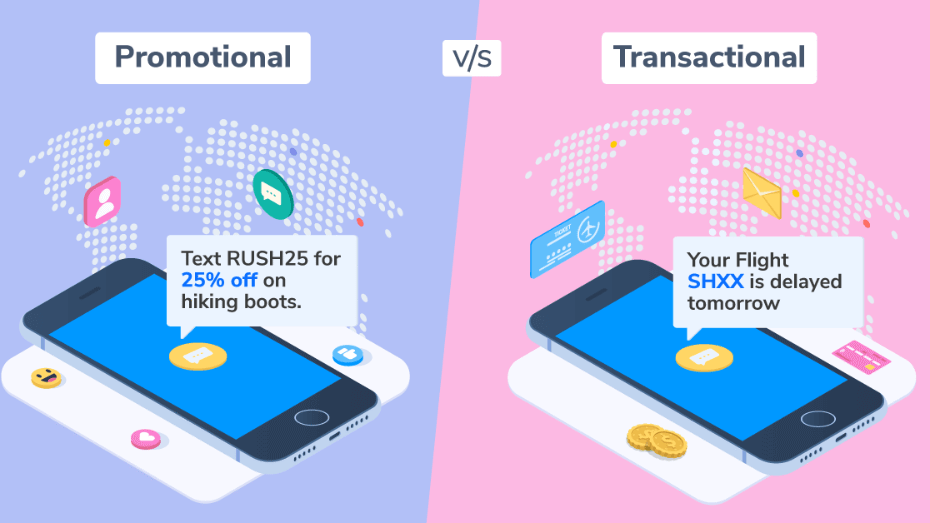
Transactional SMS refers to messages a customer expects after an action. The message supports the transaction or service. Therefore, it should focus on completion, confirmation, or critical updates.
Common transactional examples:
- Order confirmation
- Shipping and delivery updates
- Appointment reminders
- Password reset or one-time codes
- Payment receipts
- Service outage updates
- Two-factor authentication
Transactional SMS works because it reduces uncertainty. It also reduces support tickets. Moreover, it builds trust because the message is useful.
What Promotional SMS Means
Promotional SMS messages aim to drive purchase or engagement. Therefore, it includes offers, launches, shopping reminders, and loyalty prompts.
Common promotional examples:
- Flash sale announcements
- New product drops
- Back-in-stock promos (when not requested as an alert)
- Discount codes
- VIP early access
- Abandoned cart offers (when framed as marketing)
- Referral program pushes
Promotional SMS works because it triggers action fast. However, it also increases the risk of opt-out. So it needs more discipline.
Why The Difference Matters
Message type affects trust. It also involves legal and carrier expectations. Moreover, it affects performance.
If you mix types, customers feel tricked. For example, a shipping update should not contain a coupon. That feels like bait-and-switch. As a result, customers opt out or complain.
Also, transactional and promotional messages often require different consent treatment. Therefore, you should treat them as separate programs, even if they share the same platform.
The Quick Rule: “Did The Customer Trigger This?”
Use one simple test.
If the customer triggered the message through an action, it is transactional. If your brand triggered the message to drive revenue, it is promotional.
However, some cases sit in the middle. For example, a back-in-stock message can be transactional if the customer requested the alert. Yet it becomes promotional if you send it broadly to sell.
So focus on expectation. When customers expect the text, you reduce complaints. Therefore, you protect deliverability.
What Transactional SMS Should Include
Transactional SMS should be useful, clear, and minimal. It should also be accurate every time.
Use this checklist.
Transactional SMS Checklist
Include:
- Brand name in the first line
- What happened or what changed
- The key details (order number, time, location, amount, or status)
- The next step, if any
- A help path when needed (HELP, support link, or phone)
- One link only, and only if it helps complete the task
Avoid:
- Upsells and promos
- Excessive emojis
- Multiple links
- Vague language
- Fake urgency
Also, keep the tone neutral. Transactional texts should feel like service, not sales.
Transactional SMS Templates
Below are clean templates you can copy and adapt.
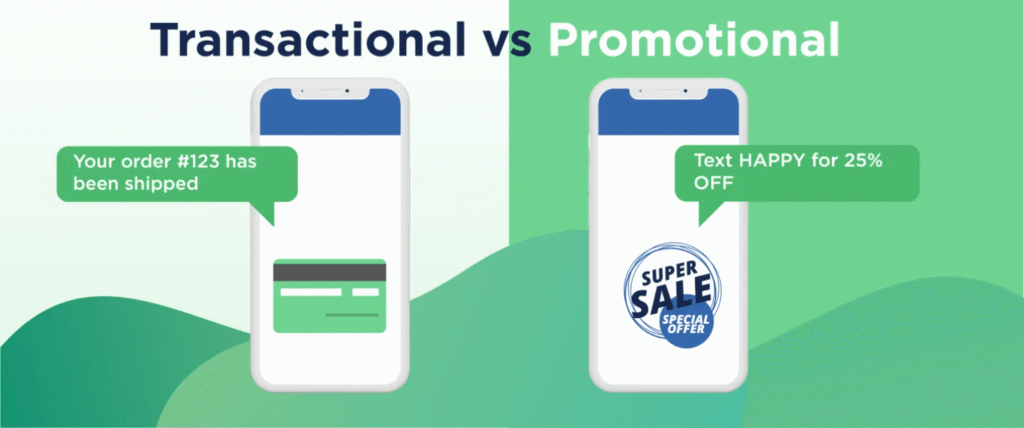
- Order Confirmation: “{{Brand}}: Thanks, {{FirstName}}. Order {{OrderNumber}} is confirmed. Total {{Amount}}. Track: {{Link}} Reply HELP.”
- Shipping Update: “{{Brand}}: Your order {{OrderNumber}} shipped. ETA {{Date}}. Track: {{Link}}”
- Delivered Notification: “{{Brand}}: Delivered today. If you need help, reply HELP or visit {{Link}}.”
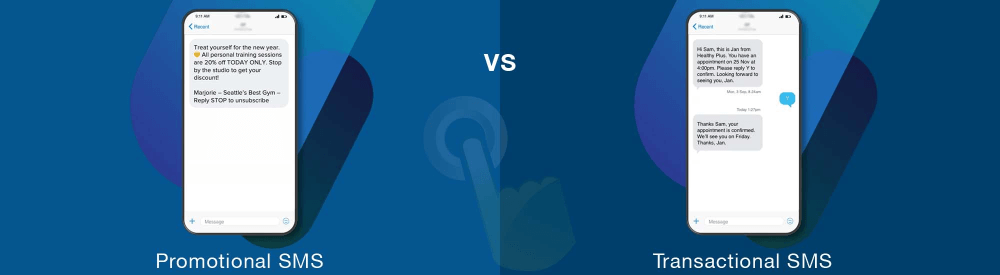
- Appointment Reminder: “{{Brand}} reminder: {{Service}} on {{Day}} at {{Time}} ({{Location}}). Reply C to confirm or R to reschedule.”
- Payment Receipt: “{{Brand}}: Payment received. Amount {{Amount}}. Receipt: {{Link}} Reply HELP if this looks wrong.”
- Two-Factor Code: “{{Brand}}: Your security code is {{Code}}. It expires in 10 minutes. If you didn’t request this, reply HELP.”
- Service Outage Update: “{{Brand}} update: We’re investigating an issue affecting {{Service}}. Next update by {{Time}}. Status: {{Link}}”
Notice the pattern. Each message has one job. Therefore, it stays clear.
What Promotional SMS Should Include
Promotional SMS should still be clear. However, it must also motivate action. So it needs a stronger value hook and a simple call to action.
Promotional SMS Checklist
Include:
- Brand name
- The offer or value in the first line
- A clear deadline or stock note when true
- One primary CTA
- One link
- Opt-out instruction (STOP) when required by your policy and region
- A help path when relevant
Avoid:
- Bait-and-switch language
- Repeated “urgent” claims
- Too many offers in one text
- Multiple links
- Sending too often
Also, match frequency to expectations set at opt-in. Otherwise, opt-outs spike.
Promotional SMS Templates
- Flash Sale: “{{Brand}}: 24-hr sale. Save {{Discount}} on {{Category}}. Ends tonight. Shop: {{Link}} Reply STOP to opt out.”
- New Product Drop: “{{Brand}}: New drop is live. Limited quantities. Shop now: {{Link}}”
- VIP Early Access: “{{Brand}} VIP: Early access starts now. Shop before the public: {{Link}}”
- Back-In-Stock Promo: “{{Brand}}: {{Product}} is back. Get it before it sells out: {{Link}}”
- Abandoned Cart Nudge: “{{Brand}}: Still want your cart? Checkout here: {{Link}} Need help? Reply HELP.”
- Re-Engagement Offer: “{{Brand}}: We missed you. Here’s {{Discount}} off your next order. Use {{Code}}: {{Link}}”
- Referral Push: “{{Brand}}: Give {{GiveAmount}}, get {{GetAmount}}. Share your link: {{Link}}”
Again, each message stays focused. And each message makes the next step easy.
Timing Rules For Each Type
Timing is different for each type. Therefore, treat timing as part of the message design.
Transactional Timing
Transactional texts should be near real-time. Customers expect speed.
Good timing examples:
- Order confirmation: immediately
- Shipping update: when carrier status updates
- Appointment reminder: 24 hours before, then 2 hours before if needed
- OTP: immediately
Also, avoid late-night transactional texts unless truly necessary. If you must send, keep it strictly essential.
Promotional Timing
Promotional texts should respect the customer’s day. They should also respect quiet hours.
Common timing rules:
- Send during business hours for your audience
- Avoid early morning and late night
- Limit promos to a predictable cadence
- Use triggers for intent moments (cart, back-in-stock, browse)
Also, spread messages out. If you send a promo today, avoid sending another tomorrow unless it’s a high-intent trigger.
How To Keep Transactional And Promotional Separate
Separation is easier when you define streams.
Use these practices:
- Use separate opt-ins for marketing vs service when possible
- Use separate keywords at signup (DEALS vs UPDATES)
- Label message types in your system
- Use different templates and tone rules
- Train teams not to slip promos into service texts
Also, consider using separate numbers for transactional vs promotional if your volume and tooling support it. That separation reduces confusion. Therefore, it can protect trust.
A Simple Preference Center By Text
You can manage preferences without a fancy portal. SMS can do it.
Example: “{{Brand}}: What texts do you want? Reply 1 Deals, 2 Order updates, 3 Both, 4 Pause.”
Then store the preference and respect it. As a result, opt-outs drop.
Compliance And Trust Notes
Keep this section simple. Trust drives deliverability and conversion.
Do these things:
- Get clear consent
- Identify your brand
- Make STOP work
- Honor opt-outs fast
- Send what you promised
- Avoid deceptive copy
- Protect sensitive info
Also, never request full card details by SMS. Use secure links for payments.
How To Measure Success For Each Type
Measure transactional and promotional messages differently.
Transactional metrics:
- Delivery rate
- Support ticket reduction
- Confirmation rate (for appointments)
- On-time attendance
- Customer satisfaction signals
Promotional metrics:
- Click rate
- Conversion rate
- Revenue per recipient
- Unsubscribe rate
- Incremental lift vs no-SMS group
Also, watch opt-outs by message type. If a specific promo template spikes opt-outs, fix it or stop it.
Conclusion
Transactional SMS and promotional SMS serve different jobs. Transactional messages reduce uncertainty and support the customer. Promotional messages drive revenue and engagement.
So keep them separate. Write each one for its purpose. Keep copy short. Use one clear action. Then respect timing and preferences.
Do that, and you will protect trust while improving performance.