Missed appointments cost businesses time, revenue, and momentum. When a customer forgets a booking or fails to show up, the business loses more than one slot on the calendar. It also loses staff productivity, scheduling efficiency, and often the chance to serve another customer. Therefore, many businesses now use SMS to confirm appointments and reduce no-shows before they disrupt the day.
SMS works because it reaches people quickly and fits naturally into daily behavior. Most customers notice text messages faster than emails and often respond to texts more readily than to phone calls. As a result, businesses can confirm attendance, send reminders, and make rescheduling easier without creating friction. More importantly, texting helps customers take simple actions at the right time.
This matters across many industries. Healthcare providers, salons, automotive service centers, real estate teams, consultants, and professional service firms all depend on reliable attendance. However, customers often miss appointments for predictable reasons. They forget the time, misplace the confirmation, get busy, or delay canceling because the process feels inconvenient. SMS helps solve these problems through direct, timely communication.
At the same time, appointment reminders do more than protect the schedule. They also improve the customer experience. A well-timed text gives people clarity, convenience, and a simple way to respond. Consequently, SMS has become one of the most practical tools for reducing no-shows while strengthening customer relationships.
Why No-Shows Hurt More Than Many Businesses Realize
A no-show affects more than one missed meeting. First, it creates lost revenue, especially for businesses that rely on booked time slots. Second, it wastes staff capacity because employees prepare for appointments that never happen. Third, it reduces scheduling flexibility because that empty slot often cannot be filled at the last minute. Therefore, repeated no-shows can quietly damage both efficiency and profitability.
In addition, missed appointments disrupt operations. A late cancellation or no-show can throw off the flow of the day, create idle time, and complicate staffing decisions. Meanwhile, other customers may face longer wait times on other days because the business cannot reassign the unused slot. As a result, no-shows often create ripple effects beyond the missed visit itself.
Customer behavior also plays a role. Many no-shows do not happen because people deliberately ignore the appointment. Instead, they happen because reminders arrive too late, confirmations get buried, or canceling feels harder than simply not showing up. That is exactly why SMS works so well. It helps businesses address forgetfulness and inconvenience before they lead to missed appointments.
Why SMS Works So Well For Appointment Confirmations
SMS works because it combines speed, visibility, and convenience. Most customers keep their phones nearby throughout the day, so text messages usually get noticed quickly. In contrast, email reminders can sit unread for hours, and phone calls often go unanswered. Therefore, a text message is more likely to reach the customer before the appointment slips from mind.
Texting also reduces effort. A customer can read a reminder in seconds and reply just as quickly. That ease matters because people are far more likely to confirm, cancel, or reschedule when the process feels simple. Consequently, SMS turns passive reminders into active scheduling tools.
Another reason SMS performs well is clarity. Text messages work best when they are short, so businesses naturally focus on the most important details: date, time, location, and next step. As a result, customers know exactly what to expect and what to do next.
Here is how SMS supports appointment management:
| Appointment Stage | How SMS Helps | Main Benefit |
|---|---|---|
| Booking Confirmation | Sends immediate appointment details | Reduces confusion |
| Pre-Visit Reminder | Reminds customers before the visit | Improves attendance |
| Confirmation Request | Prompts a yes or no response | Increases accountability |
| Rescheduling Support | Makes changes easier | Saves more appointments |
| Follow-Up | Re-engages missed or completed visits | Improves retention |
How Businesses Use SMS To Confirm Appointments
The first useful text is often sent right after the booking. This confirmation message reassures the customer that the appointment is scheduled and gives them the key details in writing. Because the message arrives quickly, it reduces the chance of misunderstanding from the start.
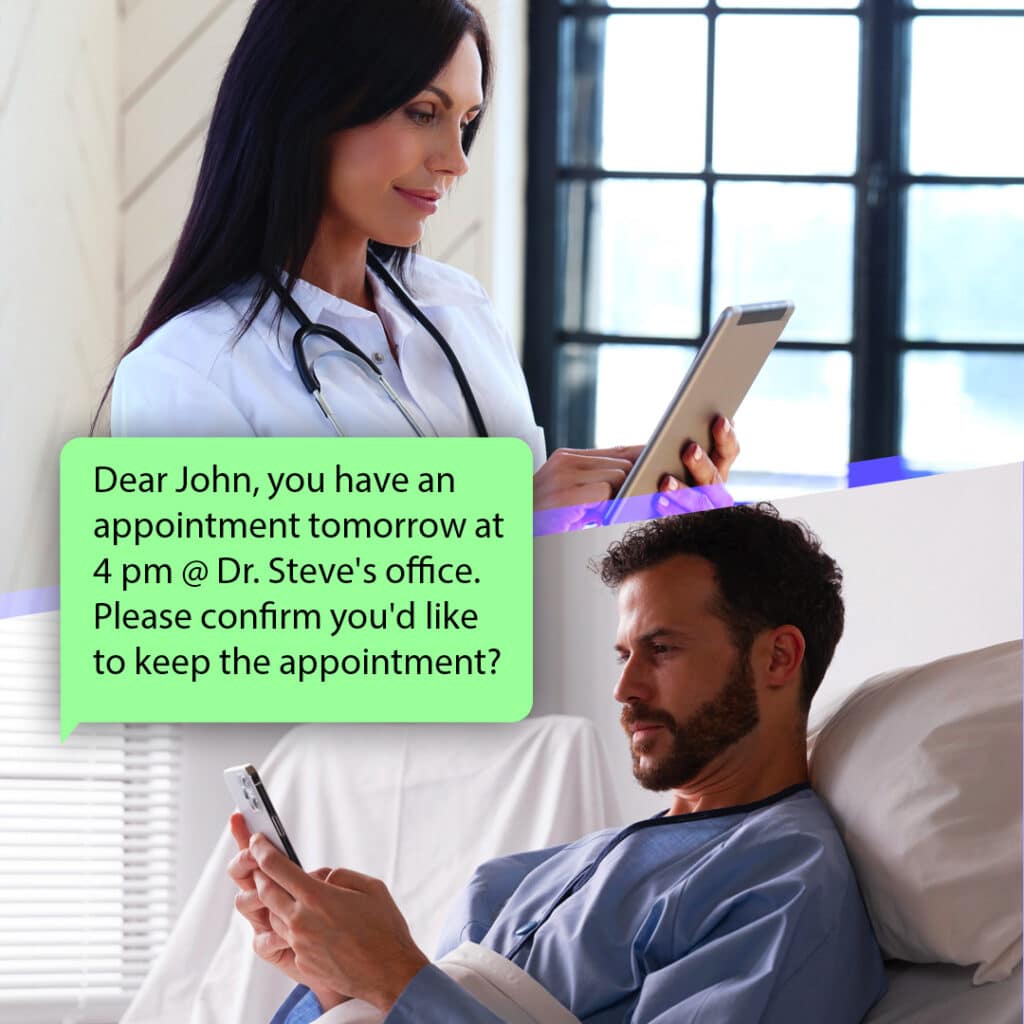
A strong confirmation text should stay simple. It should include the appointment date and time, the business name, and a clear option for the customer to make a change. For example, many businesses ask customers to reply to confirm or use a booking link. That small step adds accountability and helps the business identify weak appointments earlier.
This matters because some customers book quickly and forget just as quickly. However, if they receive a confirmation text immediately, the appointment starts to feel more concrete. In addition, the written message gives them a reference point they can check later, without having to search through email or voicemail.
How Reminder Texts Reduce No-Shows
Reminder timing plays a major role in no-show reduction. A message sent too early may be forgotten, while one sent too late may not leave enough time for the customer to respond. Therefore, many businesses use a short sequence of reminders rather than relying on a single one.
For example, a business may send one confirmation text when the booking is made, another reminder the day before, and a final reminder a few hours before the appointment. This sequence keeps the visit visible without overwhelming the customer. As a result, attendance rates often improve.
Reminder texts also make cancellations easier to manage. If a customer cannot attend, a text gives them a simple way to respond before the appointment time passes. Consequently, the business has a better chance of rescheduling or filling the slot. That is far better than discovering the problem only after the customer fails to arrive.
How SMS Improves The Customer Experience
SMS helps businesses reduce no-shows and improve the customer experience in practical ways. First, it gives customers confidence that the booking is real and organized. Second, it saves them time because they do not need to dig through emails for details. Third, it gives them a low-friction way to ask questions or make changes.
This convenience matters because customer experience often shapes repeat business. A business that communicates clearly and makes scheduling easy feels more professional and more reliable. Therefore, SMS can improve both attendance and customer satisfaction simultaneously.
It also helps businesses sound more responsive. When customers receive fast confirmations and timely reminders, they feel taken care of rather than left to remember everything themselves. As a result, the relationship becomes stronger before the appointment even begins.
Best Practices For SMS Appointment Confirmations
Businesses get the best results when they use SMS with a clear structure. First, they should send the initial confirmation immediately after booking. This sets expectations early and reduces confusion.
Second, they should keep messages short and specific. Customers should see the time, date, and next step right away. Third, they should make replying easy. A simple confirm, cancel, or reschedule option can recover appointments that might otherwise become no-shows.
Fourth, they should time reminders carefully. Many businesses see better results with a reminder the day before and another closer to the appointment. Fifth, they should personalize when possible. Including the customer’s name or the service type can make the reminder feel more relevant.
Here is a useful framework:
| Best Practice | Why It Matters |
|---|---|
| Confirm Immediately | Sets clear expectations |
| Keep Messages Concise | Improves readability |
| Offer Easy Reply Options | Reduces missed responses |
| Use Timed Reminders | Keeps appointments top of mind |
| Personalize Where Possible | Improves engagement |
Common Mistakes To Avoid
Some businesses weaken results by sending too many reminders. If the customer receives too many texts, the communication starts to feel noisy instead of helpful. Therefore, reminder frequency should stay purposeful.
Another mistake is vague wording. A message that does not clearly show the appointment time or next step may confuse the customer rather than help them. Likewise, businesses sometimes make canceling too hard. However, easier cancellations often lead to fewer true no-shows because customers can respond before the slot is lost.
In addition, some teams fail to connect SMS reminders with their scheduling system. When messages go out late or contain incorrect details, trust drops quickly. Accuracy matters just as much as speed.
Final Thoughts
Appointment confirmations and reminders work best when they are fast, clear, and easy to act on. SMS delivers all three. It helps businesses confirm bookings, remind customers at the right time, and reduce no-shows before they create lost revenue and wasted capacity.
More importantly, SMS improves the full scheduling experience. It makes communication easier for customers and makes appointment management more reliable for businesses. Therefore, it supports both operational efficiency and stronger customer relationships.
When businesses use SMS strategically, they do more than protect the calendar. They improve attendance, reduce friction, and create a smoother path from booking to arrival. For any business that relies on scheduled visits, SMS remains one of the most effective tools for confirming appointments and reducing no-shows.