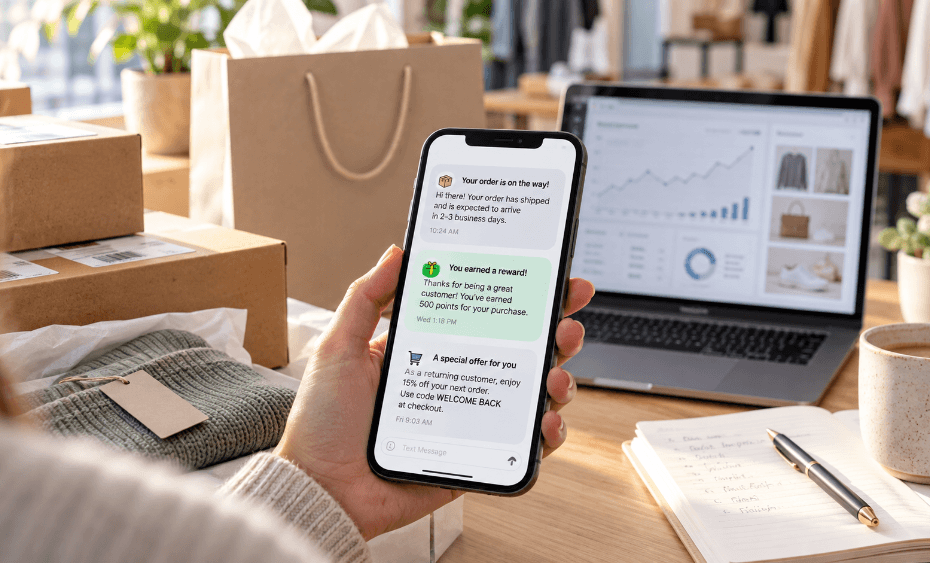
Retail brands spend heavily to win new customers. However, real profit often comes after the first purchase, when shoppers return, buy again, join a loyalty program, and start trusting the brand. This is where SMS marketing can become a powerful retention channel.
Unlike email, SMS reaches customers directly on their phones. Unlike paid ads, it doesn’t require brands to pay every time they want to reach an existing customer. As a result, retail brands use text messages to guide shoppers from first purchase to repeat purchase with timely updates, useful reminders, personalized offers, and two-way conversations.
This case-study-style guide explains how a retail brand can use SMS marketing to increase repeat purchases. Instead of focusing only on discount blasts, it follows the customer journey after the first order and shows how text messages can build trust, reduce friction, and create more reasons to return.
Quick Answer: How Do Retail Brands Use SMS To Increase Repeat Purchases?
Retail brands use SMS to increase repeat purchases by sending automated messages at key moments in the customer journey. These include order confirmations, delivery updates, product care tips, review requests, replenishment reminders, loyalty milestones, VIP offers, abandoned cart reminders, and win-back campaigns.
The goal is not to send more texts. The goal is to send better texts at the right time. For example, a skincare brand may send usage tips after delivery, then a refill reminder three weeks later. A fashion brand may send styling ideas after purchase, then a personalized offer based on the shopper’s category interest. As a result, SMS becomes part of the customer experience rather than just a promotional channel.
The Retail Challenge: First Orders Are Not Enough
Many retail brands celebrate the first order, but one-time buyers can be expensive. If a brand spends money on ads, influencer campaigns, SEO, or marketplace fees to acquire a customer, the first sale may not create much profit. Therefore, the second and third purchases often matter more.
However, repeat purchases do not happen automatically. Customers forget the brand, compare competitors, miss restock updates, ignore emails, or have no reason to return. Additionally, if the first post-purchase experience feels weak, customers may never develop trust.
SMS helps solve this problem by supporting customers after checkout. It can confirm the purchase, reduce uncertainty, deliver helpful information, and make the next purchase easier.
Case Study Scenario: A Retail Brand Builds A Repeat Purchase SMS System
Imagine a growing retail brand that sells apparel, accessories, and seasonal products online. The brand already sends email campaigns and runs paid ads, but many customers buy once and do not return for months.
The team decides to build an SMS retention system with four goals:
- Increase second-purchase rate
- Improve post-purchase communication
- Grow loyalty program participation
- Reduce reliance on discounts
Instead of sending the same promotion to every subscriber, the brand builds lifecycle flows based on customer behavior. Each message has a trigger, purpose, and next step.
Step 1: Capture SMS Consent Before The First Purchase
The brand starts by collecting SMS opt-ins through website pop-ups, checkout, loyalty signup, and post-purchase pages. However, it keeps SMS consent separate from email consent. This matters because SMS requires clear permission and customer trust.
A strong opt-in message explains what customers will receive, such as order updates, exclusive offers, early access, and loyalty reminders. It also mentions message frequency and opt-out instructions.
For example:
“Join ABC Style texts for order updates, early access, and VIP offers. Msg & data rates may apply. Reply STOP to opt out.”
This clear expectation reduces complaints and improves subscriber quality. As a result, the SMS list grows with people who actually want brand communication.
Step 2: Use Transactional Updates To Build Trust
After purchase, the brand sends practical messages first. It does not immediately push another sale. Instead, it confirms the order and keeps the customer informed.
A simple post-purchase sequence may include:
| Timing | SMS Purpose | Example Message |
|---|---|---|
| Immediately | Order confirmation | “Thanks for your order, Mia. Your ABC Style order #8421 is confirmed.” |
| When shipped | Shipping update | “Good news — your order has shipped. Track it here: [link].” |
| Delivery day | Delivery notice | “Your package should arrive today. Reply HELP if you need support.” |
| After delivery | Check-in | “Did everything arrive correctly? Reply 1 for yes or 2 if you need help.” |
These messages increase confidence. They also show customers the brand stays present after payment. That trust supports repeat purchases later.
Step 3: Turn Delivery Into A Relationship Moment
Many brands stop communicating after delivery. However, delivery is one of the best moments to strengthen the customer relationship. The shopper has just received the product and may still feel excited.
Instead of sending an immediate discount, the brand sends useful content. For apparel, it may share styling ideas. For beauty, it may share instructions on how to use the product. For home goods, it may send setup tips.
For example:
“Your linen shirt has arrived. Here are 3 easy styling ideas for work, weekends, and travel: [link].”
This message feels helpful, not pushy. Additionally, it increases product satisfaction. When customers get more value from the first purchase, they become more likely to buy again.
Step 4: Ask For Feedback Before Asking For Another Sale
The brand waits a few days, then asks for feedback. This step matters because customers want to feel heard. It also helps the brand catch problems before they become negative reviews or lost customers.
A feedback text may say:
“How was your ABC Style order? Reply 1–5 to rate your experience.”
If the customer replies with a low rating, the workflow routes the conversation to support. If the rating is high, the brand can ask for a review or invite the customer to join the loyalty program.
This creates a smarter path. Happy customers receive engagement prompts, while unhappy customers receive help. As a result, SMS supports both retention and service recovery.
Step 5: Send Personalized Cross-Sell Messages
After the first purchase, the brand uses product category data to recommend related items. A shopper who bought a sweater might receive a scarf recommendation. A shopper who bought running shoes might receive socks or performance gear.
A strong cross-sell message should connect naturally to the original purchase:
“Your knit sweater pairs well with our winter scarf collection. See the top picks here: [link].”
Personalization matters because generic promotions often feel like noise. However, relevant recommendations feel useful. As a result, shoppers have a clearer reason to return.
Step 6: Use Replenishment Or Seasonal Timing
Some retail products follow natural repeat-purchase cycles. Beauty products, supplements, pet supplies, household goods, and consumables often need replenishment. Apparel and accessories may follow seasonal cycles.
A refill reminder might say:
“Running low? Most customers reorder your daily moisturizer around this time. Refill here: [link].”
A seasonal reminder might say:
“Cool weather is coming. Your favorite knit style is back in new colors: [link].”
Timing makes these texts more effective. Instead of sending random campaigns, the brand aligns messages with customer need.
Step 7: Connect SMS With Loyalty And VIP Milestones
Loyalty programs work better when customers remember them. SMS can remind shoppers about points, rewards, and VIP milestones at moments when action makes sense.
For example:
“You have 380 points, Mia. You are only 120 points away from your next reward. See what qualifies: [link].”
This type of message turns loyalty into progress. Additionally, it gives customers a reason to buy without relying only on discounts. Over time, loyalty texts can increase repeat purchase frequency and customer lifetime value.
Step 8: Use Win-Back Messages Carefully
Not every customer returns quickly. So, the brand creates a win-back flow for shoppers who haven’t purchased in 60, 90, or 120 days. The message should feel relevant and respectful.
For example:
“We miss you at ABC Style. Your favorite sweater line just restocked in new colors. Want to see them?”
This type of message works better than a generic “Come back and save 15%.” It references customer interest and invites engagement. However, frequency control matters. If a customer ignores multiple win-back texts, the brand should slow down or stop.
Results Retail Brands Should Track
A repeat-purchase SMS strategy needs clear metrics. The brand should track more than click rate.
Important metrics include:
- SMS opt-in rate
- Second-purchase rate
- Repeat purchase rate
- Revenue per recipient
- Reply rate
- Review completion rate
- Loyalty enrollment rate
- Opt-out rate
- Support resolution rate
- Customer lifetime value
These numbers show whether SMS creates real retention value. For example, a campaign with fewer clicks may still win if it drives more second purchases or stronger loyalty engagement.
Compliance And Trust Come First
SMS is a high-attention channel, so trust matters. Retail brands should collect proper consent, clearly identify themselves, include opt-out instructions, and avoid sending too often. CTIA messaging guidance emphasizes consent and an opt-out option as starting points for business text messaging. Shopify’s retail SMS guidance also highlights separate opt-in, quiet hours, and compliance expectations for text marketing.
Additionally, brands should stop messages when customers opt out and avoid unclear sender identity. Trust protects deliverability, reduces complaints, and keeps SMS valuable.

Final Thoughts
Retail brands use SMS marketing to increase repeat purchases by turning post-purchase moments into useful customer touchpoints. Order updates build trust. Delivery check-ins create support opportunities. Product tips improve satisfaction. Cross-sell texts make recommendations easier. Loyalty reminders create progress. Win-back messages bring inactive customers back with relevance.
Ultimately, the best SMS retention programs do not rely only on discounts. They use timing, personalization, service, and customer replies to create better buying experiences. When retail brands send helpful texts at the right moment, SMS becomes more than a marketing channel. It becomes a repeat-purchase engine.