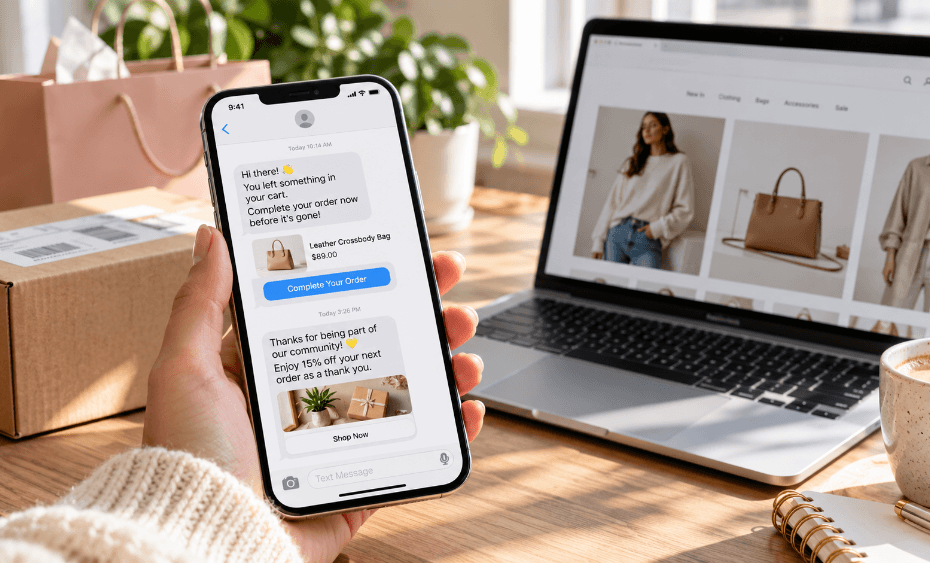
E-commerce SMS marketing helps online stores reach shoppers at moments when timing matters most. A customer may leave a cart, wait for a restock, check shipping updates, or forget to reorder a product they liked. In each case, a short, relevant text message can bring them back faster than another ad or email.
This matters because online stores compete for attention every day. Email inboxes get crowded, paid ads become expensive, and social media reach can change without warning. Therefore, SMS gives brands a direct channel to customers who have already shown interest and opted in.
However, successful e-commerce SMS marketing is not about sending random discounts. It works best when stores build automated flows around customer behavior. Abandoned cart reminders, browse abandonment texts, post-purchase updates, replenishment reminders, loyalty messages, and win-back campaigns can all support sales and retention when they follow clear consent and opt-out rules.
Quick Answer: How Do Online Stores Use SMS Marketing?
Online stores use SMS marketing to recover abandoned carts, send shipping updates, promote product drops, recommend related items, remind customers to reorder, collect reviews, and bring inactive shoppers back. They usually trigger these messages from e-commerce data, such as checkout activity, purchase history, product views, delivery events, or loyalty status.
For example, a store can send a cart reminder after someone starts checkout but does not buy. Later, after purchase, it can send delivery updates and product-care tips. Then, after several weeks, it can send a replenishment reminder or personalized cross-sell offer. As a result, SMS supports the full customer lifecycle, not just one promotion.
Why SMS Works For E-Commerce
SMS works for e-commerce because it is immediate, simple, and action-oriented. A shopper can read a text, tap a link, return to a cart, track an order, or reply with a question in seconds. That makes SMS especially useful for moments when customers are close to taking action.
Additionally, SMS can support retention by keeping the brand visible after the first purchase. Many shoppers buy once and then forget the store. However, a well-timed text message can remind them to use the product, earn rewards, check out new arrivals, or reorder.
Still, the channel requires restraint. Because SMS feels personal, every message should have a clear reason. If a brand texts too often or sends irrelevant offers, customers may opt out quickly.
Abandoned Cart SMS: The Revenue Recovery Flow
Abandoned cart SMS is one of the most common e-commerce text workflows. It targets shoppers who added products to a cart or started checkout but left before buying.
A good abandoned cart text should include the brand name, a simple reminder, and a direct link back to the saved cart. For example:
“ABC Store: You left something behind. Complete your order here: [link]. Reply STOP to opt out.”
Many stores use a short sequence instead of one message. The first text may remind the shopper. The second may answer a common objection, such as shipping time or returns. The final text may include urgency or an incentive.
A practical sequence could look like this:
| Timing | Message Goal | Example Focus |
|---|---|---|
| 1–2 Hours Later | Friendly reminder | Saved cart link |
| 20–24 Hours Later | Remove hesitation | Shipping, returns, social proof |
| 48 Hours Later | Final nudge | Limited offer or low-stock reminder |
However, stores should stop the flow immediately when the customer purchases. Otherwise, the experience feels careless.
Browse Abandonment SMS
Browse abandonment SMS targets shoppers who viewed products but did not add them to the cart. This flow works best for known subscribers because the store already has permission to text them.
For example:
“Still interested in our leather tote? See colors and availability here: [link].”
This message should feel helpful, not invasive. Therefore, stores should limit browse reminders and avoid texting after every product view. A stronger strategy focuses on high-intent behavior, such as viewing the same product multiple times, checking size guides, or browsing sale items.
Post-Purchase SMS Builds Trust
Retention starts immediately after checkout. Once someone buys, the brand should reduce uncertainty and improve confidence.
Post-purchase SMS messages can include:
- Order confirmation
- Shipping confirmation
- Delivery alerts
- Setup or product-care tips
- Support check-ins
- Review requests
For example, an apparel brand might send care instructions after delivery. A beauty brand might send usage tips. A subscription brand might remind customers when it will process the next shipment.
These messages improve the experience by helping customers get more value from the product. Moreover, a better first experience makes the second purchase more likely.
Replenishment And Reorder Reminders
Replenishment texts work well for products that customers use repeatedly. This includes skincare, supplements, pet supplies, coffee, household goods, contact lenses, and personal care items.
The timing should match the product cycle. For example, if a product usually lasts 30 days, the store can send a reorder reminder around day 24 or 25. The message might say:
“Running low? Your daily moisturizer may be almost finished. Reorder here and get it before you run out: [link].”
This type of SMS feels useful because it solves a real customer problem. Additionally, it encourages repeat purchases without relying only on discounts.
Loyalty And VIP SMS Campaigns
SMS can make loyalty programs more visible. Customers often forget their points, rewards, or VIP status unless the brand reminds them at the right time.
A loyalty text may say:
“You have 420 points and are close to your next reward. Shop your favorites here: [link].”
VIP texts can also announce early access, limited drops, birthday offers, or member-only bundles. Because these messages feel exclusive, they can increase repeat purchase frequency and customer lifetime value.
However, exclusivity should stay meaningful. If every message claims to be “VIP,” the value disappears. Therefore, stores should reserve VIP texts for genuinely useful moments.
Win-Back SMS For Inactive Customers
Win-back SMS campaigns target customers who haven’t purchased in a set period, such as 60, 90, or 120 days. The goal is to remind them why they bought before and give them a reason to return.
A strong win-back message connects to past behavior:
“Your favorite running socks are back in stock. Want to restock before the next drop sells out? [link]”
This message works better than a generic “We miss you.” It references the customer’s interest and makes the next step clear.
However, stores should not overuse win-back messages. If a customer ignores one or two attempts, reduce frequency or remove them from active promotional flows.
Two-Way SMS Helps Convert More Shoppers
E-commerce SMS becomes more powerful when customers can reply. A shopper may ask about size, shipping, returns, ingredients, compatibility, or availability. If the brand answers quickly, the conversation can turn hesitation into a sale.
For example, after a cart reminder, a customer may reply, “Does this fit true to size?” A support agent or AI-assisted inbox can respond with size guidance and a link to the cart. As a result, the text becomes a helpful sales conversation rather than a simple reminder.
Two-way SMS also improves trust. Customers feel that the brand is reachable, not just promotional.
Compliance Comes First
E-commerce SMS marketing requires clear permission and a clear opt-out process. CTIA guidance requires non-consumer message senders to obtain consent before texting consumers and to provide a way to opt out of future messages.
Cart recovery texts also need careful consent language because they are marketing messages tied to customer behavior. Current e-commerce SMS guidance emphasizes that abandoned cart SMS requires customer consent and an easy way to opt out.
Additionally, message senders should honor standard STOP wording and normal opt-out phrases such as “unsubscribe,” “cancel,” or “please opt me out.”
Metrics To Track
E-commerce SMS should connect to business outcomes, not just message activity.
Track these metrics:
- SMS opt-in rate
- Cart recovery revenue
- Click-through rate
- Reply rate
- Conversion rate
- Repeat purchase rate
- Revenue per recipient
- Opt-out rate
- Loyalty participation
- Customer lifetime value
These numbers show whether SMS supports growth without hurting customer trust.

Final Thoughts
E-commerce SMS marketing helps online stores recover abandoned carts and improve retention through timely, useful messages. Cart reminders bring shoppers back before interest fades. Post-purchase texts build confidence. Replenishment reminders drive repeat orders. Loyalty and VIP messages increase customer value. Win-back texts bring inactive shoppers back with relevance.
Ultimately, the best SMS programs do not treat texting as a discount machine. They use consent, timing, personalization, automation, and two-way conversations to create a better customer journey. When online stores send the right message at the right moment, SMS becomes a powerful channel for both immediate sales and long-term retention.